Graduation is more than just a ceremony marked by caps, gowns, and applause; it is a deeply emotional milestone that represents years of effort, growth, and transformation. When you begin searching for graduation speech examples, ideas & messages that truly inspire, you quickly realize that this moment is about far more than words on a page. It’s the point where late-night studying, small victories, failures, friendships, and personal breakthroughs all come together in one defining pause.
For many students, this day is not just about receiving a certificate; it is about stepping into a new identity. One chapter closes, filled with familiar routines and known paths, while another begins, uncertain, exciting, and full of possibility. It often marks the first true step into adulthood, where choices carry more weight and dreams begin to take shape in the real world. That’s exactly why the words spoken on this day carry such importance.
A graduation speech is not just a tradition; it is an opportunity. The right words, delivered at the right moment, can stay with someone long after the ceremony ends. People may forget the exact sequence of the event, but they rarely forget how a speech made them feel. A powerful message can spark courage in someone who feels unsure, offer clarity to someone feeling lost, or remind graduates of their strength when they begin to doubt themselves later in life. It can guide decisions, shape confidence, and plant ideas that grow over time. In many ways, a great speech becomes a quiet companion, something graduates carry with them into new challenges and opportunities.
But, despite its importance, writing or delivering such a speech can feel overwhelming. Many people struggle with knowing where to begin. Should it be serious or lighthearted? Personal or universal? Inspirational or practical? How do you balance emotions without sounding cliché? And perhaps most importantly, how do you say something that truly matters, something that feels authentic rather than rehearsed? These questions often make the process intimidating, especially when the audience includes peers, teachers, families, and mentors, all sharing the same meaningful moment.
That’s where this guide comes in. Instead of offering generic phrases or overused quotes, this blog is designed to help you craft something real, something that resonates. Here, you will find practical ideas that simplify the process, examples that show what works, and heartfelt messages that connect on a deeper level. Whether you are a student preparing to stand at the podium, a teacher guiding someone else, or simply someone looking for inspiration, this guide will walk you through what makes a graduation speech not just good, but unforgettable.
Why Graduation Speeches Matter in 2026?
Good graduation speeches are not about sounding perfect. They are about being real. The most powerful words are often the simplest ones, spoken with honesty and genuine emotion. On a day filled with meaning, people are not looking for perfection. They are looking for something they can feel and relate to.
At graduation, students feel many emotions at once. There is pride in how far they have come, excitement for what lies ahead, fear of stepping into the unknown, and hope for the future. It is a moment where everything feels intense and important. A great speech speaks to all of that. It puts those feelings into words and reminds graduates that what they are experiencing is shared by everyone around them. It creates a sense of connection in a moment of change.
Research shows that motivational speaking can increase confidence and clarity in young adults. According to the American Psychological Association, positive messaging and encouragement can improve self-belief and goal-setting behavior in students. This means that the right words at the right time can have a lasting impact, shaping how graduates see themselves and the choices they make in the future.
A meaningful speech does three things.
- It reflects on the past by honoring the journey and lessons learned.
- It celebrates the present by recognizing the achievement and the moment.
- It prepares for the future by offering guidance, hope, and direction.
Graduation Speech Ideas That Actually Work
If you’re stuck on what to say, here’s the truth: the most powerful graduation speeches are not the most complicated ones; they’re the most honest. You don’t need perfect words or dramatic lines to make an impact. What truly connects with people is sincerity. When a speech feels real, it resonates. When it reflects shared experiences, it stays with the audience long after the applause fades.
Instead of trying to impress, focus on meaning. The ideas below are simple, but when expressed with genuine emotion and clarity, they can turn an ordinary speech into something unforgettable.
1. Talk About the Journey
One of the easiest and most effective ways to connect with your audience is by reminding them of the path they’ve all walked together. Graduation is not just about the destination; it’s about everything that led up to it. Think about the small, everyday moments that often go unnoticed but shape the entire experience.
Talk about the late-night study sessions, the stress before exams, the group projects that tested patience, and the friendships that made everything worthwhile. Mention the laughter in classrooms, the shared struggles, and even the failures that later became lessons. These details bring your speech to life because everyone in the audience has lived some version of them.
When you highlight the journey, you create a sense of unity. People feel seen, understood, and connected, and that’s what makes your words powerful.
2. Focus on Growth
Graduation is not just about finishing a phase; it’s about becoming someone new. A strong speech doesn’t just celebrate achievements; it reflects on transformation. Think about how much has changed from the first day to the last.
Students don’t just gain knowledge; they gain confidence, resilience, independence, and a better understanding of themselves. Some learn how to speak up, others learn how to listen. Some discover their passions, while others learn through uncertainty.
By focusing on growth, you shift the message from “we completed something” to “we evolved into something more.” That perspective feels deeper and more meaningful. It reminds graduates that their value isn’t just in grades or results, but in who they’ve become along the way.
3. Highlight Challenges
Every meaningful journey includes obstacles, and acknowledging them adds authenticity to your speech. If everything sounds perfect, it doesn’t feel real. But when you talk about struggles, people relate instantly.
You can mention academic pressure, self-doubt, moments of failure, or even unexpected challenges that tested everyone’s strength. These experiences are often the hardest, but they are also the most defining.
The key is not just to mention challenges, but to show what they taught. Did they build resilience? Did they teach patience or courage? When you frame struggles as lessons, your speech becomes empowering rather than heavy.
This approach also sends a strong message: success is not about avoiding difficulties, but about growing through them.
4. Encourage the Future
A graduation speech should not only look back, but it should also look ahead. This is your chance to give hope and direction, even if it’s simple and open-ended.
Remind graduates that they don’t need to have everything figured out. Life after graduation is often uncertain, and that’s okay. What matters is the willingness to move forward, to try, to fail, and to try again.
You can talk about possibilities instead of pressure. Encourage curiosity, courage, and staying true to one’s values. A hopeful message about the future helps graduates feel excited rather than anxious about what’s next.
Sometimes, the most powerful reminder is this: the path ahead is not fixed, it’s something they get to create.
5. Add Light Humor
Even the most emotional speech benefits from a touch of humor. It makes your message feel natural and keeps the audience engaged. A well-placed joke or lighthearted comment can break the tension and make your speech more memorable.
You don’t need to be a comedian. Simple, relatable humor works best, like joking about deadlines, group projects, or those moments when everyone secretly struggled. These small touches make your speech feel human and approachable.
Just keep it balanced. Humor should support your message, not distract from it. When used well, it adds warmth and personality, making your speech enjoyable as well as meaningful.
Graduation Speech Examples: Simple and Powerful
Sometimes, the best way to understand how a graduation speech works is to see it in action. Examples help you feel the tone, structure, and emotional flow more clearly. Below are a few short and meaningful graduation speech examples that show different styles you can use or adapt.
Example 1: Short and Emotional
Today is not just about finishing school. It is about everything we went through to get here. The early mornings, the stress, the laughter, and the friendships all shaped who we are today. We did not just learn subjects in classrooms; we learned life itself. We learned how to keep going even when things felt difficult, and how to celebrate small victories along the way. No matter where life takes us next, we will always carry these memories and lessons with us.
Example 2: Motivational Tone
We may not have all the answers today, and that is completely okay. Life is not meant to be figured out all at once. What truly matters is that we are willing to try, to grow, and to keep moving forward even when things feel uncertain. Success is not about being perfect or always getting it right. It is about persistence, learning from mistakes, and refusing to give up when challenges appear. This is just the beginning of our journey, not the final destination.
Example 3: Light and Relatable
Some of us are still trying to figure out what we want to do in life, and honestly, that is perfectly normal. Even adults are still learning and adjusting as they go. There is no strict timeline for having everything figured out. What matters most is that we keep learning, stay curious, and remain open to new opportunities. Life is not a straight path, and that is what makes it interesting.
How to Write a High School Graduation Speech
Writing a high school graduation speech can feel overwhelming at first, especially when you think about speaking in front of teachers, parents, and classmates all at once. But the process becomes much easier when you break it down into simple, manageable steps. You do not need fancy vocabulary or complicated ideas. What matters most is clarity, honesty, and connection.
Below are some easy steps to help you write a speech that feels natural and meaningful.
Start with a Strong Opening
Your opening matters because it sets the tone for everything that follows. If you begin in an engaging way, you immediately capture attention and make people want to listen.
You can start with a question that makes people think, a short story that reflects a shared experience, or even a relatable moment from school life. The goal is to make your audience feel connected from the very first line. For example, you might talk about the first day of school, a funny classroom memory, or the feeling of walking into exams unprepared but determined.
A strong opening does not need to be dramatic. It just needs to feel real.
Keep It Personal
The most memorable graduation speeches are the ones that feel personal. Instead of trying to sound like everyone else, focus on your own experiences and observations. Think about what school has meant to you specifically.
Maybe you learned patience through group projects, confidence through presentations, or resilience through challenges. When you share real moments, your speech becomes more authentic and relatable. People may not remember every word, but they will remember how your story made them feel.
Personal details are what turn a general speech into a meaningful one.
Stay Clear and Simple
A common mistake is trying to sound overly formal or impressive. In reality, the best speeches are the simplest ones. Your goal is not to confuse your audience with big words, but to communicate clearly.
Speak the way you normally speak, just with a little more thought and structure. Short sentences, simple words, and natural flow make your message easier to understand and more powerful.
When your speech is clear, your message stands out without effort.
Add a Message
Every strong graduation speech has a central idea. This is the heart of your message, the one thing you want people to remember after everything is over.
It could be about growth, friendship, perseverance, or embracing the unknown. Whatever you choose, keep it focused and repeat it in different ways throughout your speech so it stays in the audience’s mind.
A clear message gives your speech direction and purpose. Without it, even good words can feel scattered.
End with Impact
Your conclusion is your final opportunity to leave a lasting impression. End on a note that feels hopeful, inspiring, or thoughtful.
You might encourage your classmates to believe in themselves, remind them that this is just the beginning, or reflect on how far everyone has come together. A strong ending does not need to be long. It just needs to feel meaningful.
When you close with intention, your speech stays with people long after the ceremony ends.
What Makes a Great Student Graduation Speech
A memorable student graduation speech is not about being the most polished speaker or using the most impressive vocabulary in the room. It is not about sounding perfect or delivering every line flawlessly. Instead, what truly makes a speech stand out is honesty. When a speaker is genuine, the audience naturally connects with the message, even if the words are simple.
A great graduation speech feels real, reflects shared experiences, and leaves people with something meaningful to think about long after the ceremony ends.
Authenticity: Speak from the heart
Authenticity is the foundation of any strong graduation speech. When you speak from your own thoughts and experiences, your words carry more weight. You do not need to pretend to be someone else or copy a formal style that does not feel natural to you.
People can sense when a message is real. A simple, honest reflection often has more impact than a highly prepared but disconnected speech. Whether you are talking about challenges, achievements, or memories, let your own voice guide the message. That sincerity is what makes people listen.
Relatability: Talk about shared experiences
A powerful speech makes the audience feel included. Relatability comes from highlighting moments that everyone in the room understands in their own way. This could be exam stress, classroom memories, friendships, group projects, or even the excitement and confusion of growing up together.
When people hear their own experiences reflected in your words, they feel connected. It turns your speech from a personal message into a shared memory. That sense of unity is what makes graduation speeches emotionally powerful.
Clarity: Keep your ideas simple
Clarity is often overlooked, but it is essential. A great speech does not try to say everything at once. Instead, it focuses on a few clear ideas and expresses them in a simple way.
Avoid overcomplicating your message. Short sentences, direct language, and well-organized thoughts make your speech easier to follow. When your audience understands you without effort, they are more likely to stay engaged and remember your message.
Simplicity is not a weakness. It is what makes communication strong.
Emotion: Make people feel something
A graduation speech should not just inform, it should move people. Emotion is what turns words into memories. Whether it is nostalgia, pride, gratitude, or hope, your speech should create a feeling that stays with the audience.
You do not need dramatic expressions or overly emotional language. Even a small, sincere moment can be powerful if it is honest. When people feel something during your speech, they are more likely to remember it long after the event is over.
Purpose: Have a clear takeaway
Every great speech has a purpose. It should leave the audience with a clear message or idea to carry forward. Without a purpose, even well-written words can feel scattered or forgettable.
Ask yourself what you want people to remember. It could be about believing in themselves, appreciating the journey, or embracing the future with confidence. Once you know your core message, build your speech around it and reinforce it throughout.
A strong takeaway gives your speech direction and meaning.
Graduation Message That Leaves a Lasting Impact
Sometimes, a single line can stay with someone forever. A strong graduation message doesn’t need to be long; it just needs to be meaningful.
Here are a few examples:
- “You don’t have to have everything figured out. Just take the next step.”
- “Your journey is just beginning, make it your own.”
- “Success is not about never failing. It’s about never giving up.”
- “Be proud of how far you’ve come, and excited for where you’re going.”
These messages work because they are simple, honest, and encouraging.
Common Mistakes to Avoid in Graduation Speeches
Even a good idea can lose its impact if not delivered well. Here are some mistakes to avoid:
- Being Too Long
Keep your speech focused. Long speeches lose attention.
- Using Complicated Language
Simple words are more powerful and easier to understand.
- Trying to Impress Too Much
You don’t need big quotes or fancy words. Be real.
- Ignoring the Audience
Remember, you are speaking to your classmates, teachers, and families. Make it relatable.
Sums Up
Graduation is not just about finishing something. It’s about becoming someone new.
The best speeches remind us of that. They tell us:
- You have grown
- You have strength
- You are ready
Whether you are writing or delivering a speech, remember this: you don’t need to be perfect. You just need to be real.
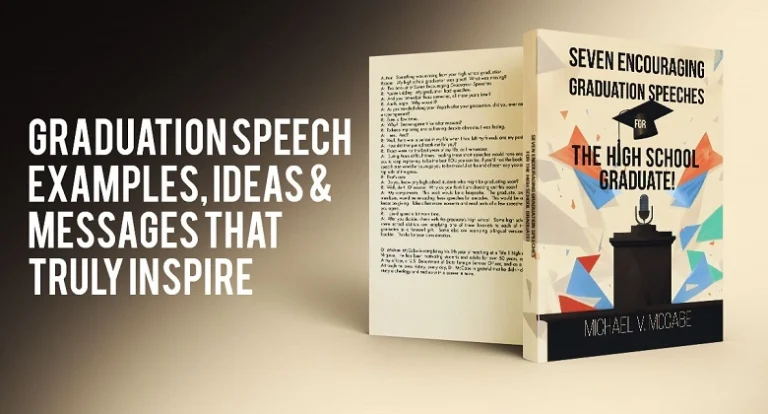
As highlighted in Seven Encouraging Graduation Speeches for the High School Graduate!, the journey doesn’t end here. It continues, with new challenges, new opportunities, and new achievements.
So speak with honesty. Share with courage. And most importantly, inspire with heart.
Frequently Asked Questions
A graduation speech becomes memorable when it feels real. Simple words, honest emotions, and personal stories matter more than large vocabulary or long quotes.
A strong graduation speech is usually 3 to 7 minutes long. It should be short enough to keep attention but long enough to share one clear message.
Avoid overly complicated ideas, long lectures, or negative comparisons. It’s better to focus on hope, growth, and shared experiences.
Use real moments from school life, friends, exams, struggles, or funny memories. Speaking from your own experience makes your speech more relatable.
The most important message is that graduation is not the end. It is the start of a new journey where learning, growth, and change will continue.